
Our Human Trafficking Awareness Resources.
January, 2026
As January is National Human Trafficking Awareness month, we are highlighting below several anti-human trafficking reports, tip sheets, and webinars we produced with the National Center on Safe Supportive Learning Environments (NCSSLE). While designed primarily for educators, there is a lot to learn here for anyone involved in child and youth care work. Please share with others.
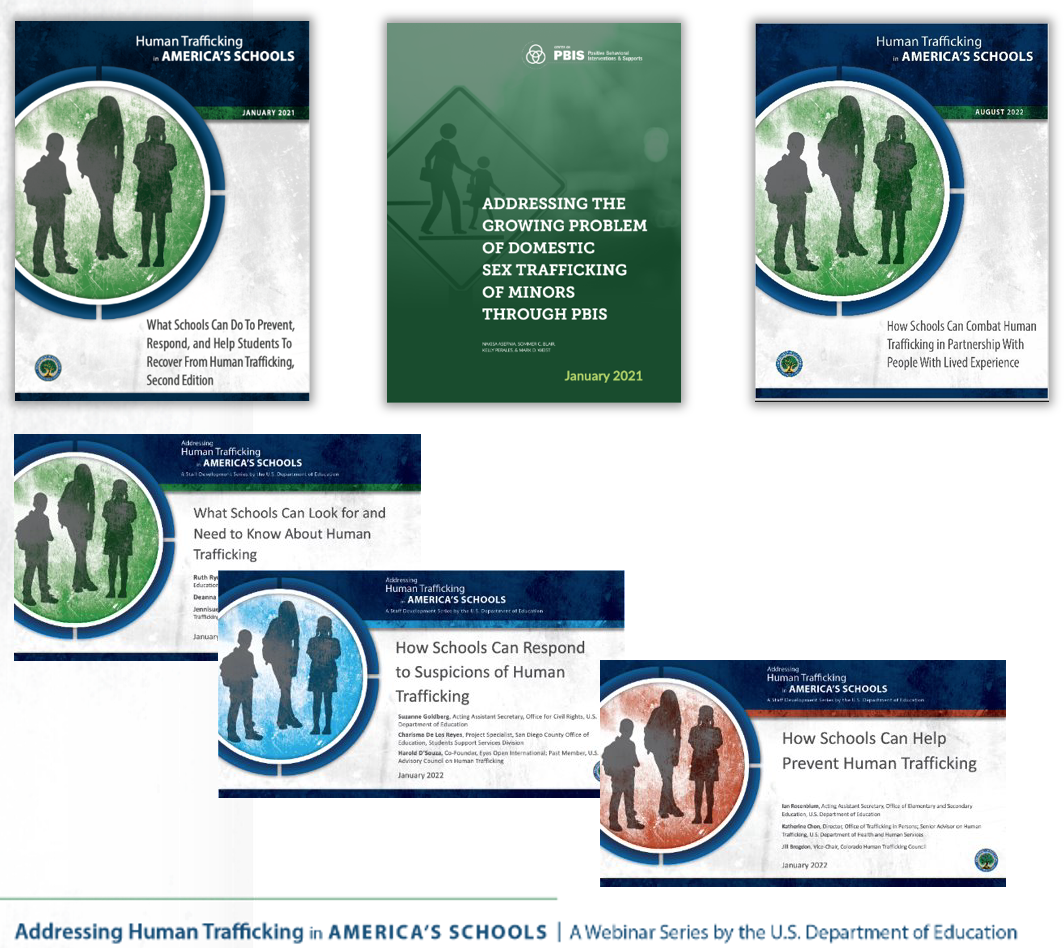
Human trafficking in America’s schools: What schools can do to prevent, respond, and help students to recover from human trafficking. This report details the prevalence of child trafficking in the U.S., information on risk factors and indicators of child trafficking, implications for schools in addressing child trafficking, information on how professional development of school staff and prevention education for students and families can reduce the likelihood of trafficking, and details on how policies, protocols, and partnerships with other community sectors can help prevent trafficking.
Human trafficking in America’s schools: How schools can combat human trafficking in partnership with people with lived experience. This report describes ways schools can partner effectively with people with lived experience in trafficking, and explores some of the uniquely powerful and important benefits to including people with lived experience in this work.
How to Talk with Youth about Human Trafficking and Exploitation. This tipsheet offers strategies that K—12 educators can use to talk with youth about human trafficking and exploitation prevention methods. It includes social media safety tips, practice examples, and multiple additional resources.
How Schools Can Start a Human Trafficking and Exploitation Prevention Program. This tipsheet highlights how K–12 educators can implement a human trafficking and exploitation prevention program and includes specific steps and strategies schools and districts can take, as well as key features of school safety protocols and related resources.
Trafficking and Exploitation Prevention Strategies for Vulnerable Students. This tipsheet details how K–12 educators can talk with youth about human trafficking and exploitation, and examples they can use to help prevent vulnerable students from being trafficked or exploited.
Addressing Human Trafficking in America's Schools Webinar Series; an archive of webinars we produced with NCSSLE and the U.S. Department of Education to support schools’ efforts to address, prevent, and respond to sex and labor trafficking.